Monday, 8 June 2015

Empty the Tanks- Perth


06/06/2015

Sam, Rowan and me went to a activity to raise awareness and hopefully free cetaceans from captivity.


Sunday, 24 May 2015

ORRCA training at Coogee Beach, WA


Yesterday we took part in course run by ORRCA the Organistion for the Rescue and Research of Cetaceans in Australia. It was a day long course with around 25 attendees. It was great to see a range of people there with  different ages and backgrounds all sharing a passion to want to protect some of the most amazing animals on the planet. There was a large group for Sea Shepard along with people from other conservation groups such as Stop the Shark Cull, Save Marine Life and Ban Balloons Freo.

First we listened to a lecture informing us on all the cetaceans in Australia along with the theory on how to save them. Interestingly the most important thing to consider with a standing is keeping the animal as calm and stress free as possible. Alot of techniques use the knowledge of mob mentality when trying to save the animals. For example, the dominate leader (usually the largest female) is always re-floated first in order the draw the other animals away from the beach We also learnt health and safety aspects, how to deal with the media at standings and the legislation in place. 

After a lunch break it was time to put the theory into practice. We all kitted up in our wetsuits and hit the beach whera some tasks had been set up for us. Firstly as a group we have to organise ourselves into teams and save 4 beached animals, in this case 2 large females and 2 baby dolphins in the form of blow up swimming pool toys. We had to ensure the "animals" were stress free, keep wet and positioned the right way. Despite the strange looks from onlookers it was fun and we manage to do it pretty well although it took us 15mintues to find one baby which was half way down the beach!

Next was time to practice using the whale and dolphin slings. I had a turn being a whale and was picked up and release successfully back into the ocean. It was fun day and we were awarded with a card and certificate. We are now part of the ORRCA team, in the case of a stranding we will be contacted and activated to help save the animals.

Thanks to the ORRCA crew and the rest of the team!


http://www.orrca.org.au/

(more photos to come)

Tuesday, 17 March 2015

Diving Weligama

It's our last day in Weligama and time to move on. I've been diving here for 3 weeks, during that time have taken people fun diving, taught DSD's and assisted with open water and advance open water courses. Rowan has also completed a course and is now an advance open water diver. 

Dives complete: 20 + 4 confined dives
Deepest dive:     31m 


Parrot fish and butterfly fish, yala rock

Unfortunately much of the once pristine and beautiful reefs has been dystroyed in southern Sri Lanka. The damage has been caused by trawling fishing nets, dynamite fishing and 2004's tsunami. The evidence can be seen as the sea floor is covered in fragments of dead coral. It's sad to see, sometimes you see glimpse of the beauty of the past but much is now desolate and bare. One dive site was even describes as 'apocalyptic' by ofher divers. 

Some dive sites and local snorkeling spots seem to lack in fish which the local 'jungle' diving trade maybe to blame. The local men catch fish, shrimps and other desirable marine life which is sold for the booming aquarium market. There equitment is stored at the side of the dive shop and they even use the same tanks. Thaminda used to be a 'jungle' diver so now allows his old colleges to make use of his centre. All the 'jungle' fishing it's totally unregulated and seemingly out of control.  It seems crazy to facilitate the decline of marine life while at the same time making a business taking toritst to see it! 

   Banner fish and butterfly fish

Despite all this we have enjoyed our stay and met some amazing friendly people. It's nice to feel part of a family while being so far from our own. I won't be taking some of the dive practices I witnessed with me which are very much in the 'Sri Lankan' style, we even took our equitment to the boat by tuc-tuc. However I have made some new friends and gained some new diving expirence. 

  Thaminda and me outside the shop- "diver diver, you ok?"

A huge thank you to Thaminda and his family, who were very welcoming, funny and hospitable. Shout out to the rest of dive team and crew too! Buuuuuuut, See you in Trincomalee! 

   Lasse the racist dive center dog 

Thursday, 5 March 2015

Save Our Beach, Welligama Sri Lanka

We were involved in a beach clean in Weligama, southern Sri Lanka. I am working at Welligama dive centre who invited us along to help clean the beach. We didn't know to expect but we're presently surprised to see around 20 locals there ready with there masks and fins. We were told to wait as the 'gorvernemnt' were coming.


After 20 minutes of sitting and joking with the group, all sweating in the mid day sun. The 'governement' arrived. We couldn't believe it when a march of 100 school kids came round the corner. They had made signs and were chanting "save our beach!". At the end of the march there were local people who worked for the environmental protect agency and local marine biologists. 


We met on the beach in a huddle and a few words were said, none of which we could understand but ended to a round of applause. Then we set of collecting any rubbish we could find. The kids and teachers on land and the rest of us in the sea. 


They end result was a huge pile of rubbish from the beach and the reef. A politician appear, eager to see what work had been done. Handshakes all round, a few snaps from the local journalist and we were done.


We then all refreshed with orange juice and a spicy bun. It was great to see such a range of people their all contributing to save the beach. A man we met told us they want to make it a national event with people all over the country helping clean the beach. We made a few good contacts who want us to help with conservation projects in Sri Lanka, exciting times! 

Wednesday, 25 February 2015

Visit to Turtle Conservation Centre, Mount Latvinia Sri Lanka

So we have left the UK to explore the world with the focus of the trip on promoting and actively helping with Marine Conservation. We decided to fly to Sri Lanka to start our trip.

We had our visit two nights book to stay in Mount Latvinia, 20mins south of Colomobo, so why not while we are here visit the Turtle Consevation Centre which was 200m from our hotel on the golden sand of Mount Latvinia beach. 

The centre, which is just a few huts of the beach, is home to all 5 species of turtle which Sri Lanka plays host too; green turtle, hawksbill, black turtle, leatherback and Oliver Ridley turtle. Examples of the species were held in the various tanks, some waiting to be released back into the sea, some not old enough yet and others to badly damaged to be released. 

Hawksbill Turtle

The centre was established 10years ago due to threats posed to turtles from habitat destruction, hunting for meat and eggs and entanglement in fishing gear. As well as the various tanks the centre also had a hatchery with over 2000 eggs which have been collected from the beach in order to protect them and ensure safe release. The day before we arrived some eggs had hatched, we were lucky enough to see over 100 goofball sized one day old babies.


The centre does some great work in protecting turtles but relies heavily on donations from tourists. More investment from the government is needed to take to conservation effort higher. You can't help feeling the focus of the centre is to attach more tourists. The information available was faded and outdated. Nevertheless that said they are still doing a great job in helping protect the turtles.

Green turtle

Thursday, 12 February 2015

SOS IOM- The Ocean Art Show

As part of an SOS IOM event my girlfriend decided to organise an Ocean Art Show. 


The event hosted 12 different artist all from the Isle of Man who exhibited a variety of art; drawings, paints, prints, film and 3D art. The exhibition was a great success with over 100 people attending. 
The aim was to highlight the issue of ocean conservation and to bridge the gap between conservation and art. I helped set up the exhibition and displayed some videos I made on the Island. 
Here's a film about the day..


And we even made it in the paper!

Wednesday, 11 February 2015

Gracie the Grey Seal

Filmed and edited some footage of a grey seal we saw while diving on the Isle of Man.


Gracie, Grey Seal (Isle of Man) from Joe Redfern on Vimeo.

Sunday, 9 November 2014

Working in marine lab I.O.M - Benthic Ecology

While living on the Isle of Man I stumbled upon a marine lab in Port Erin. It's behind a clothes shop and there were two lab technicians working. I got chatting and found out it used for a environmental company whose offices were upstairs.

I explored further and met Terry and Salma who run an environmental consultants on the island. They mentioned that both the current lab employees would soon be leaving. It seemed too good an opportunity to miss so I left my contact details and mentioned I would love to work there. 

Rowan is from the island so she began work when a free space arose. Me, still recovering from my knee surgery had to wait a few weeks before I got the chance to work. 

We were given the title of Benthic Ecologist. Our main job was to sort, float and sieve the samples taken with a day grab from whatever site was been surveyed. We had to follow a strict protocol to ensure no steps were missed out as this may effect to final results. 


After the substrate had been washed, sieved and floated, Using a magnifying lense and flat edged tweeers we shifted through the sand making sure not to miss any fourna which was alive when the grab was taken. We then split what we found into; molluscs, crustaceans, polycetes, eccinaderms and "other". 

Thursday, 7 August 2014

I.O.M S.O.S

As promised here's an update:

I.O.M S.o.S is now an established facebook group with over 200 followers. Rowan, my girlfriend, is the group creator and is responsibly for the majority of post and updates. 

As we have both been away to Vietnam the group was put on hold till we returned. It's now back up and running. With weekly post about marine life and conservation in the Isle of Man. 

In the future we plan on raising the awareness of the gernal public to the impacts human have on the ocean with the interest of reducing our human impact on the island. We also want to add pressure on policy makers and industry to take measures to protect the oceans. 

Rowan is organising an ocean art show at the end of January in partership with IOM SOS. The idea is to use art and film to promote ocean conservation. 

Sunday, 20 July 2014

Diving Isle of Man- Discover Diving

During the summer I worked at Discover Diving, Port St Mary. The only dive center left on the Isle of Man.
The owners, Michael are Steve were friendly and I found it easy to become part of the diving team.

I enjoyed my time diving with them which included training dives and leading fun dives. Most of the training dives were conducted off a pier in Port Erin while on fun dives we used the state of the art, Endeavour, as the dive boat (see photo below). 
The water temperature varied from 14c to 16c so I wore a dry suite for all of my dives.

I also took my PADI enriched air diving or nitrox course with Discover Diving. This is a ticket I've wanted to get for a while now. Diving with nitrox means you use oxygen enriched air so you are exposed to less nitrogen, this makes longer and frequent diving safer. 


The Isle of Man is home to an abundance of pristine underwater ecosystems. Sandy bottoms and rocky shores dominate the coast line with areas of beautiful edges and cliffs. A huge variety of organisms can be spotted from tiny nudibranchs and gloomy dead man fingers to massive brown crabs, lobsters and an array of pelagic fish. The island is home to a vast common and grey seal population which although I didn't get chance to dive with I free dived with the seals many times, so much fun. 


Big Thanks to Michelle, Steve, Anne and the rest of the dive crew. Hopefully I'll be back to dive with you again but for now it's be great. 


http://www.discoverdiving.im


For reference: 
Michelle Haywood- +44(0)7624 300090
                               Michelle@discoverdiving.im

Sunday, 13 July 2014

Basking Shark Watch- I.O.M


I've recently moved to the Isle of Man after returning home from south east Asia. I'm waiting for an operation to fix my knee (ruptured ACL). While I'm waiting though it's been great to move to the island. Being by the sea and my girlfriend makes the waiting far more enjoyable. 

Basking sharks, which are the second largest fish in the ocean, pass through the Isle of Man following thermal fronts which provide an abundance of planktonic food. Sadly they are listed as endangered on the ICUN red list due to hunting, bycatch and disturbance (http://www.mcsuk.org/conservation_in_action/Basking+sharks/Threats+to+basking+sharks). 

The Manx basking shark watch was established to observe the abundance of basking sharks around the Isle of Man, raise awareness of the public to basking sharks and report the importance of the island to the basking shark population. This summer I was fortunate enough to join the team of researchers on the Happy Jack (photo below) on a observation mission to spot and record any marine life observations with the focus on basking sharks. 

We set off from port st Mary in the morning. Straight away we had a radio call reporting minke whale sightings. A local fishing boat made the observation near the calf of man. We set off on the 15min journey to spot the whales. Along the way I was pleased to see the abundance of marine birds (cormorants, 
Kittiwakes and Guillemots), common and grey seals and we were even lucky enough to see a Harbour porpoise. 

Unfortunately before we made it to the calf the Happy Jack suffered prop damage. We had to return to the Harbour and cancel the mission. Maybe better luck next time.


The Manx basking shark watch has been making recordings for 10 years. This year will see the release of a ten year report which aims to highlight the importance the waters of Isle of Man has to the global basking shark population. It may be used to promote the establishment of a designated protected area for basking sharks around the island. 

Sadly, 2014 has seen the lowest number of shark recordings in the past 10 years with only 9 sightings made this summer (manxbaskingsharkwatch.com). Plankton measurements have shown that zooplankton levels are low. This maybe due to unusually warm sea temperatures. In any case the zooplankton are a vital food source for basking sharks, a major reason why the sharks come to these waters. Without this food source the basking sharks have found differant feeding waters. Tags for previous years show some individuals are further north in cooler waters.

This is a great example of how a change in climate effects biotic communities within ecosystems. Whether this years warm temperatures were caused by human induced climate change, natural cycles (possible El Niño recorded in 2014?) or mixture of both it is clear to see a change in climate has effected plankton populations which has in turn effected basking shark populations. 

To me this highlights the importance of reducing human induced changes to the earths environment. Humans are disrupting natures balance, we don't yet fully understand the complexity and intricacy of the earths ecosystem, if we continue to disturb this delicate balance we don't know what may happen around the world. Lets work together to ensure we are living on a healthy life supporting earth. 


http://www.manxbaskingsharkwatch.com

Thursday, 6 March 2014

Diving in Cambodia

I've been working at Koh Rong Dive Centre for 2 weeks now. It's been great to be under the water everyday and gain some useful experience. 

During the work I've been taking customers on fun dives also giving divers who haven't dived in the last 2 years a refresher course. During this course we go through some vital emergency skills, practice buoyancy control and go diving! This makes the customer feel more comfortable in the water allowing them to enjoy diving much more. I also took new divers on discover scuba diving (DSD) courses. This is a one day course which gives the new diver a few basic but vital skills before going diving in less then 10m. It's nice to see the reaction of divers who are doing it for the first time. For fun dives i gave the customers the dive breif giving them all he information they need before the dive. At first I felt it was difficult to remember all the information but after a few days it's easy and I enjoy meeting all the customers. 

The diving around Koh Rong is good, there are some nice reefs and nice dive sites. However due to the recent weather the visibility is often low (5-8m). Although I'd prefer better visabilty I gained valuable experience of how to lead dives in low visabilty. Yesterday we had 15m vis which was real nice! I've often also been in charge of the boat which includes; ensuring the boat has all the equipment we need including kits, tanks and food, giving he customers a boat breif and taking roll calls to make sure we don't leave anyone behind.

The reefs here are full of fish and other marine life, some examples of what we see follows;
- parrotfish
- pufferfish
- blue spotted rays
- butterflyfish
- angelfish
- damsel fish
- banner fish
- barracuda 
- makeral
- nudibranchs
- corals (compact, mushroom, soft)
- anemones 


I plan on staying another few weeks, Koh Rong is an amazing place to live and I'm enjoying the diving. Thanks to everyone at Koh Rong diving. It's a lot of fun.

Sunday, 2 March 2014

So true

Photo from protest in Australia against a proposed shark cull.


Beach clean: Koh Rong, Cambodia


Beach clean on koh Rong. Heavy storms and high tides left plastics, weeds and other debri of the beach. We filled 8 bags!

Sunday, 2 February 2014

Diving in Ko Samet

On the 9th of January I flew out to Bangkok to begin a trip around SE Asia aiming to end in Australia where I plan on working. Currently I'm in Battanbang, Cambodia.

Our first stop after Bangkok was Ko Samet. It's a tiny island which in some parts is undeveloped and undistribed but other beaches have loud Russian trance playing most nights.
Anyways whilst on Ko Samet I went to speak to Mong at Mong Divers. After i told him my qualifications he said I should go in the shallows with his two thai instructors and practice some skills. After that he said there was a dive in the afternoon at the local reef. I got to dive for free and even ended up leading the dive with two paying customers. Was difficult at first as I had never dived the site but once I got us on the right direction it was a fun dive. Sadly the reef isn't exactly the most healthy with dead corals and a lack of life. However due to the water flow there are some large giant clams and we also saw two hermit crabs engaged in a shell wrapping battle over ownership of the biggest shell. Was fun to watch and you could hear the banging of the shells as they hit together. Both customers said they enjoyed the dive and thought I did a good job.

Afterwards Mong said I was welcome to go back anytime and I asked him about any conservation projects on the island. He showed me pictures of various projects they run and also said they have links with Marine Biologist at universities in Thailand. They had successful reintroduced sea grass, ran a clownfish introduction program and released infant sharks on the island. Would of been great to stay to help out but as it wa the first stop of the trip I felt like there maybe more to offer. I can always go back as Mong said I have a open invitation. It was a great expirence and good start to the trip and although it's a beautiful location (see photo) I expect other island in the south of Thailand will have much better dive with healthy reefs. Thank you Mr.Mong see you again soon. 


Sunday, 17 November 2013

Save Our Seas. Isle Of Man

Work has begun on establishing a new conservation group on the Isle of Man. My girlfriend who is from the Isle of Man has highlighted some problems concerning marine conservation and unstable fisheries. 
So far it's only in the early stage but here is a draft for the aims..

The worlds oceans provide support for all species on earth including humans! They regulate the climate, provide food and are home to thousands of beautiful creatures. Increasing human pressures are having a detrimental effect on the oceans due to factors such as overfishing and pollution. SOS IOM aims to reverse some of these factors by reigniting the connection we have with our seas. Using education, provision of information and direct action (beach cleans etc.) we want everyone to fall back in love with the seas and all it's amazing inhabitants. Every little helps when it comes to the oceans, if we cooperate together little things we change in our own lives can make a huge difference. 


More to come!

Tuesday, 23 July 2013

Built a Bird House: every little helps

As the world gets more and more developed by humans, nature is losing its home. Therefore its becoming increasingly important to accommodate for nature allowing humans and wild animals to live in harmony.

I built a new home for Starlings (Sturnus vulgaris) inspired by RSPB Giving Nature A Home


 Hopefully I'll see a new family make use of this home in the next few weeks..


Monday, 6 May 2013

Photography


Photos taken while diving in Tenerife: Arrow crab (Stenorhynchus seticornis) guarding an anemone (left) and a beautiful cuttlefish (right).

Saturday, 4 May 2013

Urchin beAWARE

Back in summer 2012 I went to live in Tenerife for 6 weeks to complete my PADI assisstant instructor SCUBA diving course at Amarilla Divers school. Beside having a awesome time in the sun I completed 50+ dives and learnt valuable diving skills. 


Me diving at El Puerto, Tenerife (2012)
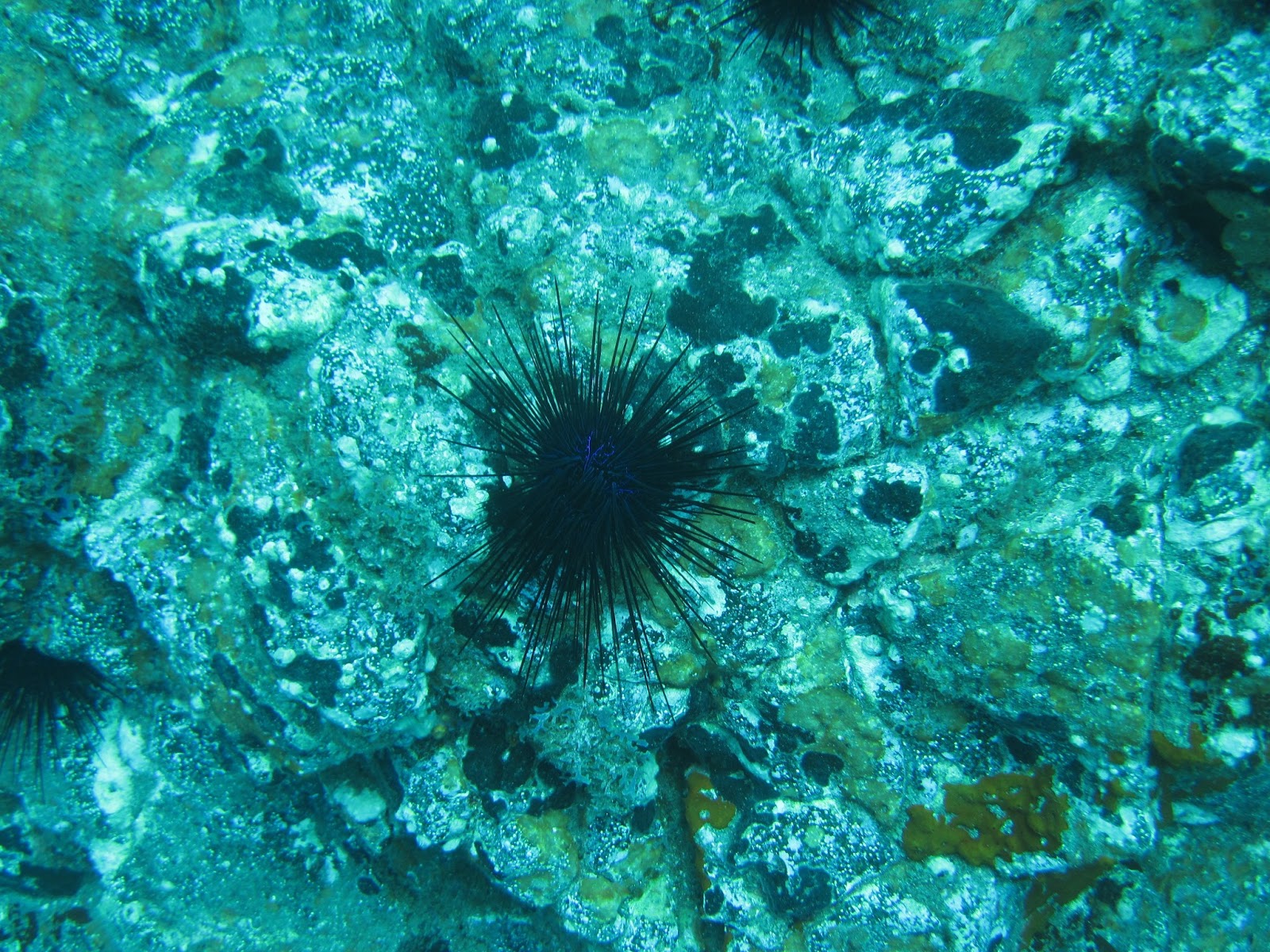
During the dives I noticed a huge abundance of Black Long-spined Sea Urchins (Diadema antillarum). Rates of abundance in some locations were as high as 200+ in a 10m x 10m space. After a short amount of research I learned to urchins were an invasive species which were highly successful due to lack of predation and competition in non-native habitats. They graze on algae and can prevent overgrowth however when urchin populations exceed healthy levels they cause overgrazing effects resulting in "bleach" white reefs.


Black Long-spined Sea Urchins (Diadema antillarum)
After talking to my fellow diving buddies we decided to investigate the impact the urchins were having on the reefs in Tenerife. We started the Project back in May 2012 and named it urchin beAWARE and set up a page on the PADI Project AWARE website (link below). Firstly we marked two 10x10 metre zones. One zone acted as an untouched control and the other was the test area where all the urchins were removed. We then logged, every week, the variety, numbers and differences of the benthic community seen in the both the zones. Once it became clear that a positive impact was produced from the removal of the urchin species from this zone the urchins could be removed from the whole reef. 
Clearing the urchins from the test zones


"House reef" mapped with areas for urchin removal and assessment.


Sadly this is where I left the project and my time in Tenerife was over however I remain in contact with Amarilla Divers and regular updates to the beAWARE page means I can see how the project is coming along. Chris Botting who is a permanent resident in Tenerife and at Amarilla Divers he runs the project and seems to be doing a through job at clearing the problem and documenting the results along the way. Here is a section of the latest news on the progress...


"The results and changes that we have seen in the reef is astonishing with some of Tenerife's rarest fish and crabs being spotted and multiple resident octopuses and moray eels moving in. The plant life growth that has occurred is remarkable with the reef rocks now covered in bushes and moss.The changes seen in the bio diversity is incredible!
It is an interesting example of how a species in its natural environment plays a crucial role in maintaining a healthy ecosystem but once out of its home environment becomes a pest!"
It was a experience to be part of the establishment of a project like this and see it develop into a success! One day I hope to go back to Tenerife and see the progress for myself.


It begins!


Blog started: So I'm coming towards the end of my entire university life and mostly I'm feeling excited (with a little bit of sadness thrown in because it has been some great years) to be finally finished with education and ready to explore.

With this blog I want to talk about Marine and other Wildlife conservation projects I have been or am currently involved in aswell as other marine related pictures/updates/ambitions!

Picture: taken in March 2013 on top of Smeaton's Tower, Plymouth UK.